Phonograph
sound recorder, 1877–1888
📌 Pin it
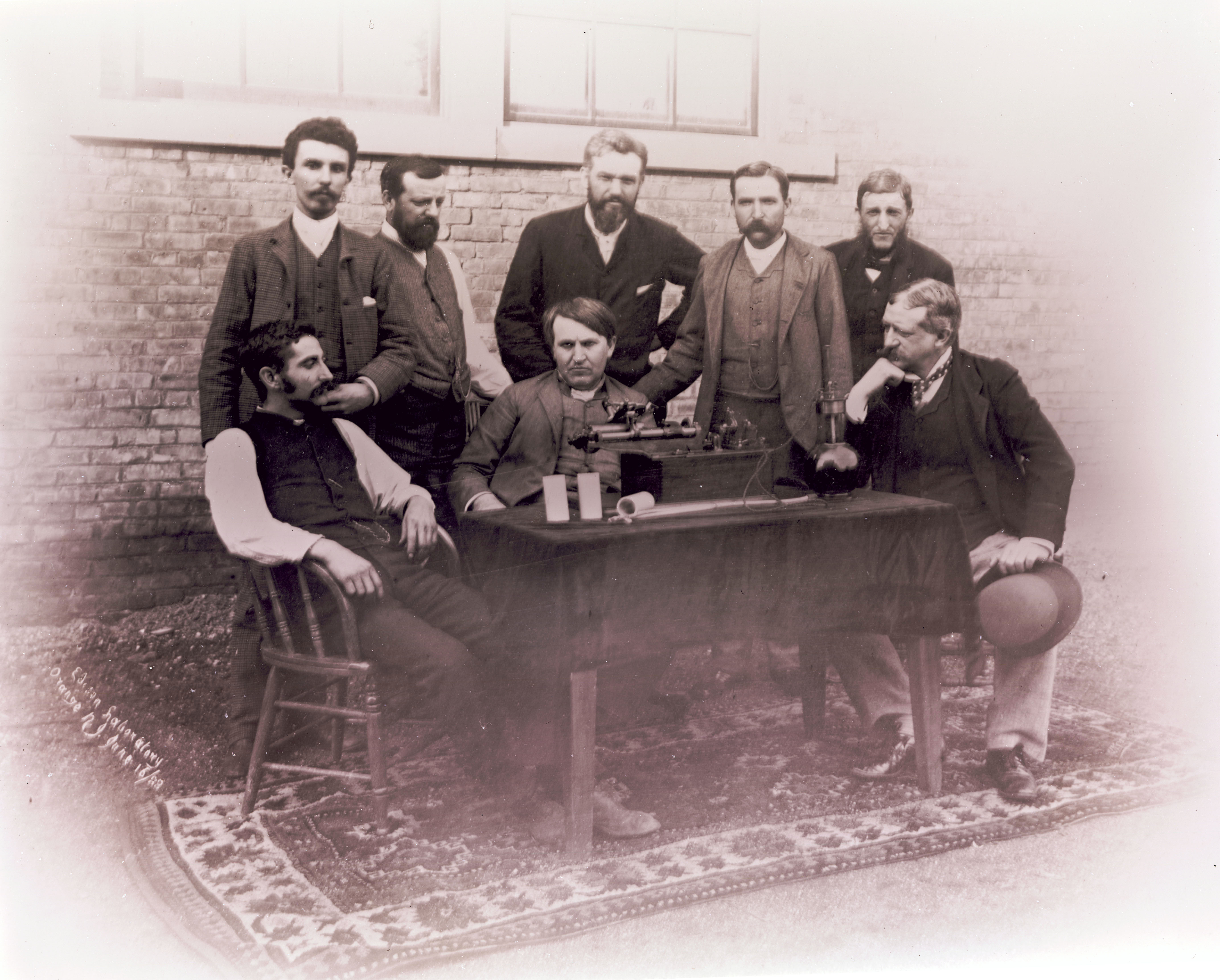
Thomas Edison's phonograph, invented in 1877, was the first machine that could both record and reproduce sound, etching vibrations onto tinfoil — later wax cylinders. His 1888 “perfected phonograph,” shown in the famous group photograph, turned a laboratory trick into a practical machine.
Victorians first met recorded sound as a miracle and a novelty: coin-slot parlor phonographs, dictation machines for offices, and eerie demonstrations where the dead seemed to speak. The idea that a voice could outlive its owner thrilled and unsettled in equal measure.
It fascinates because it was the moment sound became a thing — storable, sellable, replayable. Every podcast, playlist, and voice note descends from that 1877 tinfoil.
More in Objects & Curiosities
All →
Stereoscope
The Victorians' VR headset: twin photographs that snapped into startling 3D.

Calling Cards & Case
Before the phone call, there was the card: tiny engraved rectangles that ran Victorian social life.

Chatelaine
A housekeeper's keys, a lady's jewels: the jingling chain that said who ran the house.