Zoetrope
animation toy, 1834
📌 Pin it
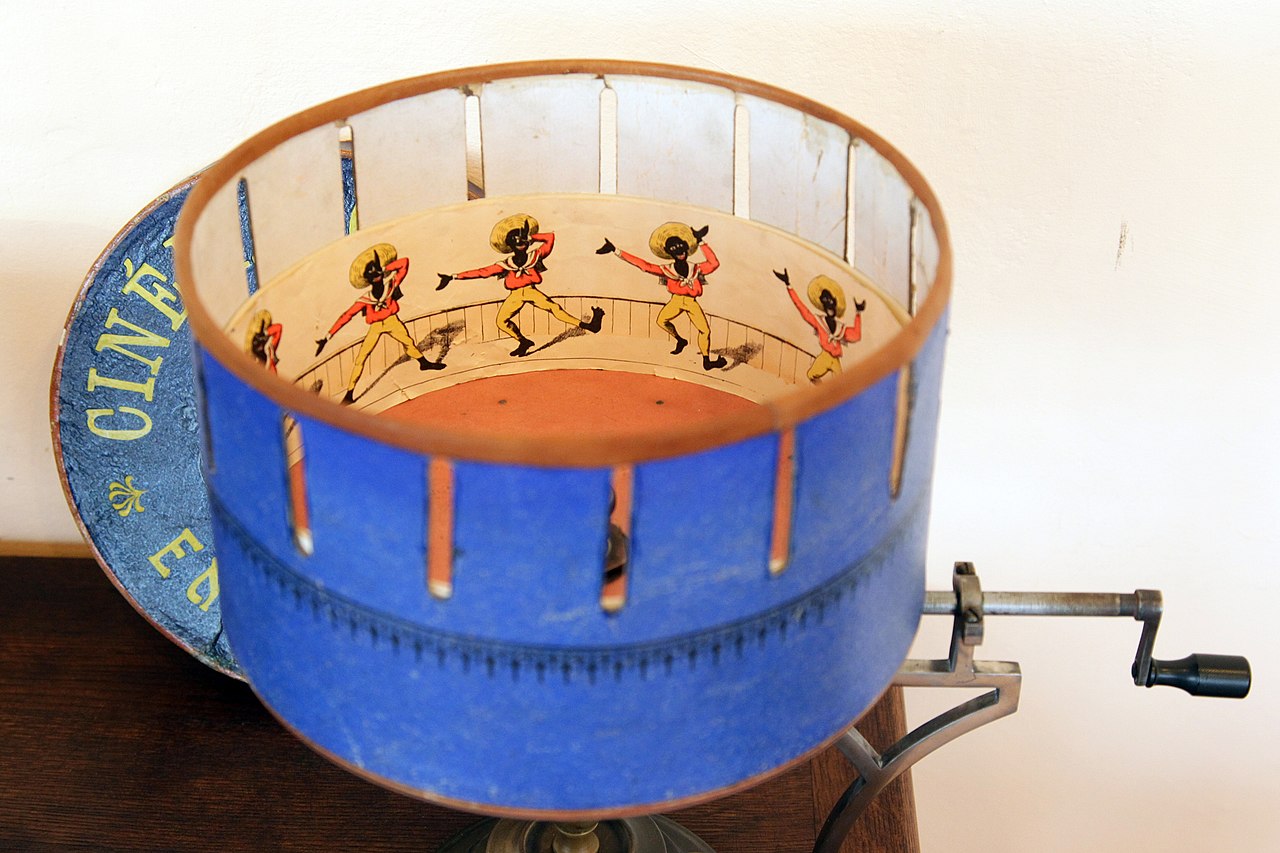
The zoetrope is a slotted drum on a spindle. Around its inside wall you place a strip of paper printed with a sequence of drawings — a horse's stride, a dancer's twirl — each slightly advanced from the last. Spin the drum and look through the slits: the drawings fuse into smooth, looping motion. The English mathematician William George Horner described it in 1834 and named it the Daedaleum, after Daedalus, the mythical inventor.
It was renamed the zoetrope — Greek for 'wheel of life' — when the American William E. Lincoln patented a version in 1867, and Victorian parlors filled with them. They were sold with printed paper strips the way consoles are sold with games: acrobats, boxers, galloping horses, each strip a tiny looping film.
It fascinates because it is cinema's nursery. The same persistence-of-vision trick that makes a zoetrope's horse run makes a film's horse run; the drum is the great-grandfather of the projector reel, and of the GIF.
Frequently asked
How does a zoetrope work?
A strip of sequential drawings lines the inside of a slotted drum. Spin the drum and look through the slits: persistence of vision fuses the flickering images into smooth, looping motion.
Who invented the zoetrope?
The English mathematician William George Horner described it in 1834 as the Daedaleum. It was renamed the zoetrope — 'wheel of life' — when William E. Lincoln patented an American version in 1867.
Is the zoetrope related to cinema?
Directly: it is cinema's nursery. The same persistence-of-vision trick that makes a zoetrope's horse run makes a film's horse run — the drum is the great-grandfather of the projector reel, and of the GIF.
Why it matters today
Every film projector, cartoon, and looping GIF descends from the zoetrope's slotted drum — artists still build giant 3D-printed zoetropes that go viral.
More in Objects & Curiosities
All →
Stereoscope
The Victorians' VR headset: twin photographs that snapped into startling 3D.

Calling Cards & Case
Before the phone call, there was the card: tiny engraved rectangles that ran Victorian social life.

Chatelaine
A housekeeper's keys, a lady's jewels: the jingling chain that said who ran the house.