Cragside
Rothbury, Northumberland, England

📌 Pin it
Cragside began in 1863 as a modest two-storey holiday lodge on a Northumbrian crag. Its owner, industrialist William Armstrong, then hired architect Richard Norman Shaw and spent the next fifteen years turning it into something extraordinary — a sprawling, multi-gabled Free Tudor mansion that critics called Wagnerian, and which friends knew as the palace of a modern magician.
Armstrong's magic was engineering. In 1870 water from one of his estate lakes drove a Siemens dynamo in what was probably the world's first hydroelectric power station; an arc lamp lit the gallery in 1878, and in 1880 Cragside became the first house in the world lit by hydroelectricity, using Joseph Swan's newly invented incandescent bulbs. Hot and cold running water, central heating, telephones, fire alarms, a hydraulic lift, and a Turkish bath suite followed — modern domestic life, invented one gadget at a time.
Outside, Armstrong was just as ambitious: five lakes, one of Europe's largest rock gardens, more than 30 miles of footpaths, and some seven million trees and shrubs planted across a 990-acre estate. The National Trust has cared for it since 1977, and the lights still come from the hills — a 2014 Archimedes screw generates hydroelectricity once more.
More in Houses & Interiors
All →
The Painted Ladies
America's most photographed Victorians — a row of Queen Anne showpieces glowing against the San Francisco skyline.
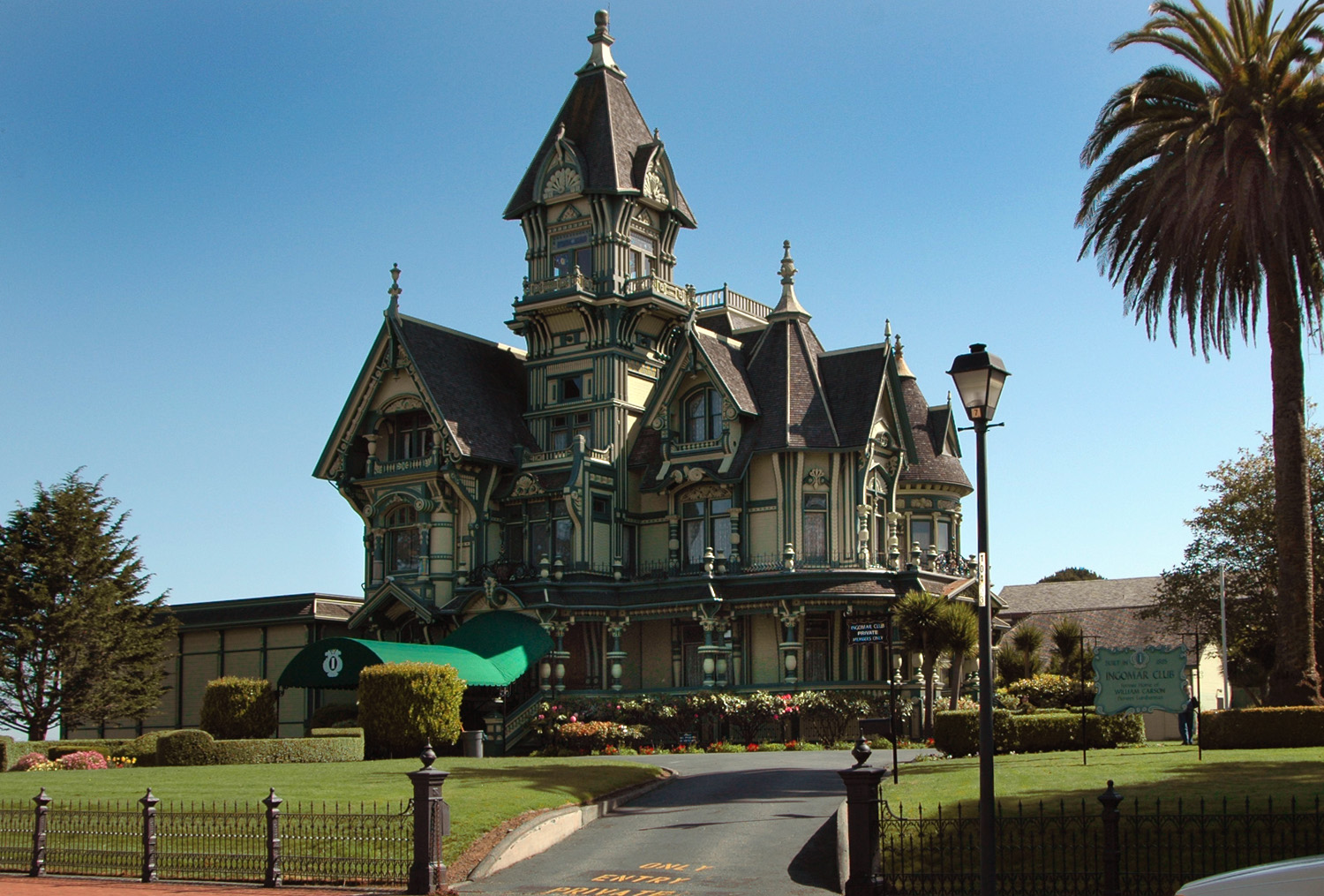
Carson Mansion
A lumber baron's $80,000 Queen Anne masterpiece — widely called the grandest Victorian home in America.

Tyntesfield
A Gothic Revival cathedral of a house, built on a guano fortune and frozen in time.