Beef Wellington
The dish the Duke never ate — first named in print, 1903
📌 Pin it
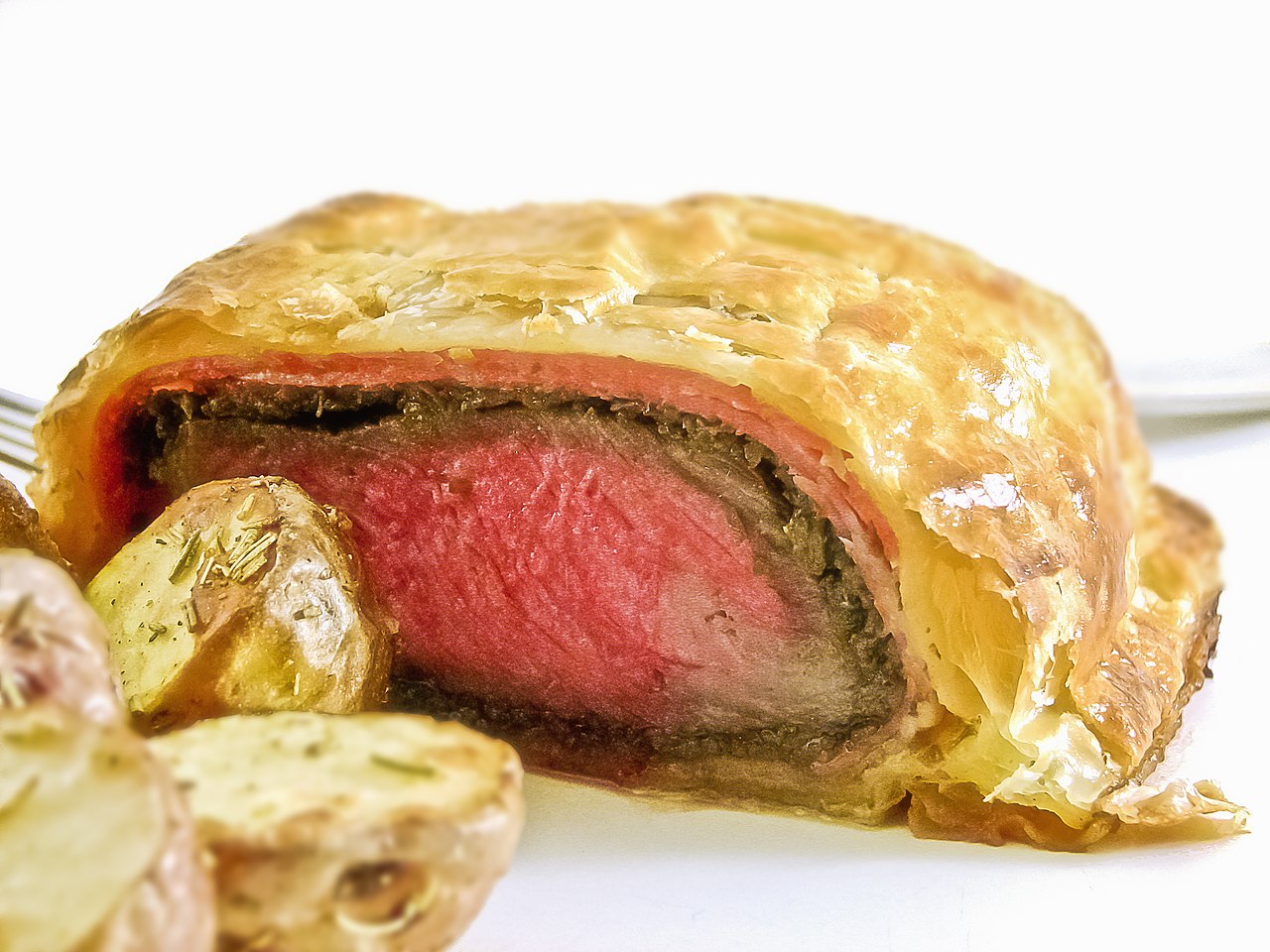
Beef Wellington is a fillet of beef coated in duxelles — finely chopped mushrooms, shallots and thyme — sometimes with pâté, wrapped in puff pastry and baked until the crust is golden and the meat rosy. The name belongs to Arthur Wellesley, first Duke of Wellington, who defeated Napoleon at Waterloo in 1815. The problem is the paper trail: Wellington died in 1852, and no cookbook of his lifetime, nor for decades after, contains the dish. A surviving menu from his Waterloo banquet of 1839 lists a lavish feast — but no beef Wellington.
The most likely ancestor is French: filet de boeuf en croûte, a fillet baked in a pastry crust, a technique with roots in the venison pasties of the 17th century — Robert May's The Accomplisht Cook of 1660 already instructs readers to bake beef "red-deer fashion in pies or pasties". The name itself first surfaces in the 20th century: on a menu aboard the steamship Fürst Bismarck in November 1899, and in a Los Angeles Times report of a bankers' dinner at the Angelus Hotel in 1903. The first published recipe appeared only in 1940, in a cookbook by a chef at Chicago's Palmer House hotel.
The dish's fame is a post-war, transatlantic story. Julia Child included a version in Mastering the Art of French Cooking (1961) and cooked it on The French Chef in 1965, calling it "filet of Wellington beef"; it became a favourite of Presidents Kennedy and Nixon and the centrepiece of the 1960s dinner party. Its Victorian claim rests on the Duke himself — his boots, his cook, his portable campaign food — but the honest history is stranger: the most British of showpiece dishes may have been named in America, half a century after the man it honours.
Frequently asked
Was beef Wellington really the Duke's favourite dish?
There is no solid proof. The story — that his cook invented it, or that the pastry resembled his boot — is popular but, as Britannica puts it, more legend than fact. Wellington himself kept a French cook who reportedly quit because the Duke was indifferent to food.
Why is it called Wellington then?
Nobody knows for certain. The name attaches to the dish only in the 20th century, first in print in America, and may simply be a patriotic rebranding of the French filet de boeuf en croûte after the hero of Waterloo.
What is duxelles?
A finely chopped mixture of mushrooms, shallots and herbs, sautéed until dry, named for the Marquis d'Uxelles and dating to La Varenne's Le Cuisinier françois (1651). It coats the fillet inside the pastry and keeps the crust from going soggy.
Why it matters today
Beef Wellington made the beef fillet in pastry the definitive celebration dish of the English-speaking world — the centrepiece of the dinner party, the Christmas table and the grand hotel menu, whatever its murky origins.
More in Food & Drink
All →
Afternoon Tea
A hungry duchess's late-afternoon pot of tea became Britain's most elegant ritual — and the world's idea of Englishness.

Christmas Pudding
A medieval bowl of plum porridge became the flaming centrepiece of the Victorian Christmas — stirred by the whole family on Stir-up Sunday.

Kedgeree
An ancient Indian rice-and-lentil dish, rebuilt by East India Company households with smoked haddock and eggs, became the Victorian breakfast.