Railways & Transport
The iron road that shrank the world — the first underground railway, Brunel's broad-gauge empire, the bridge that defied the Forth, and the little mountain train that still climbs to Darjeeling.

The London Underground
The world's first underground railway — steam trains in gas-lit tunnels that carried 38,000 Londoners on day one.

The Forth Bridge
A red steel giant across the Firth of Forth — the first great steel bridge in the world, opened by the Prince of Wales with a golden rivet.

The Orient Express
Paris to Constantinople in three nights of polished mahogany and white linen — the train that turned a railway journey into a legend.

The Great Western Railway
Isambard Kingdom Brunel's seven-foot-gauge masterpiece — the line Turner painted, and the railway Londoners nicknamed 'God's Wonderful Railway'.

The Darjeeling Himalayan Railway
A two-foot-gauge railway that climbs 2,000 metres of Himalaya on loops and zig-zags — the little Toy Train that still steams to Darjeeling.

SS Great Eastern
Six times larger than any ship afloat — Brunel's iron giant that could carry 4,000 passengers to Australia without refuelling, and ended up laying the Atlantic cable.

The Hansom Cab
Two wheels, one horse and a driver perched high at the back — the nimble cab that became the very image of Victorian London.

The Settle–Carlisle Railway
The Midland Railway's impossible line across the Pennines — fourteen tunnels, seventeen viaducts, and the Ribblehead arches marching across the moor.

Stephenson's Rocket
The little locomotive that won a £500 bet in 1829 and set the template for every steam engine that followed.

The Thames Tunnel
Eighteen years, two floods and a banquet under the river: the world's first tunnel beneath a navigable waterway.
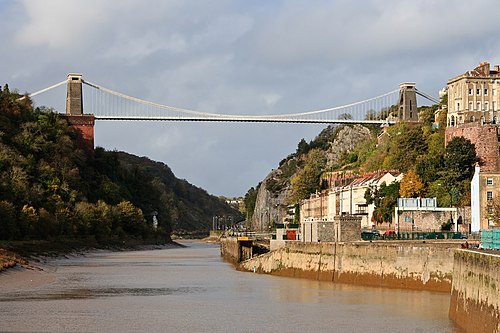
The Clifton Suspension Bridge
Brunel's 214-metre leap across the Avon Gorge — finished five years after his death, as his memorial.

The Tay Bridge
The longest bridge on earth when it opened in 1878 — and, nineteen months later, the scene of Britain's most infamous engineering disaster.

The Flying Scotsman
The 10 o'clock express that has linked the two capitals since 1862 — one of the oldest named train services still running.

The London Omnibus
Three horses, 22 passengers and a shilling fare: the bus that put London on wheels.

The Penny Farthing
Five feet up on a 60-inch wheel, no brakes worth the name — the gloriously dangerous machine that started the cycling craze.

The Severn Tunnel
Four and a third miles of brick beneath a tidal estuary — the Victorians' longest underwater tunnel, still carrying trains today.
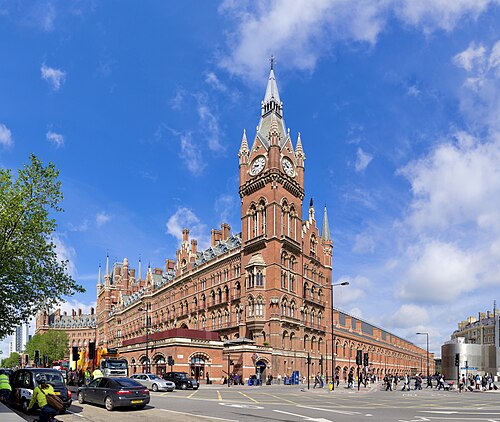
St Pancras Station
The Midland Railway's London terminus — a single iron arch 245 feet across, raised over a cellar built for Burton beer, and fronted by a Gothic palace.

Tower Bridge
A road that stops for ships — two thousand-ton bascules rising between Gothic towers, opened by the Prince of Wales in 1894 and still lifting today.

Cutty Sark
The fastest tea clipper ever built — a witch-named, copper-bottomed racer launched five days after the Suez Canal opened, and the only one left afloat.

SS Great Britain
The first ocean-going iron ship with a screw propeller — the largest vessel in the world when launched, rescued from the Falklands and sailed home 127 years later.

SS Great Western
The first steamship built to cross the Atlantic — Brunel's wooden paddle-steamer that raced the Sirius to New York and proved steam could beat sail.

Snowdon Mountain Railway
A Swiss rack railway climbing 3,140 feet to the summit of Snowdon — Britain's only rack line, opened in 1896 after a first day that ended in disaster.

City & South London Railway
The first deep-level electric tube railway — six stations in 10-foot tunnels under the Thames, its windowless carriages nicknamed 'padded cells'.

Liverpool Overhead Railway
The world's first electric elevated railway — iron viaducts above the dock road, the first electric multiple units, and a string of firsts that shaped every metro since.