The Weather Forecast on Your Phone Was Invented by a Victorian Admiral
Every morning you check the rain on your phone. The first person to publish a forecast did it in The Times in 1861 — after a storm killed 459 people off Anglesey.

Every morning, millions of people do something that would have looked like sorcery in 1860: they glance at a phone and learn whether it will rain at lunchtime. The habit is so ordinary now that nobody asks where it came from. It came from a Victorian admiral — and from a shipwreck. On 1 August 1861, The Times printed the first public weather forecast: “General weather probable during the next two days,” with London promised 62 degrees and clear skies. It was, by most accounts, largely right.
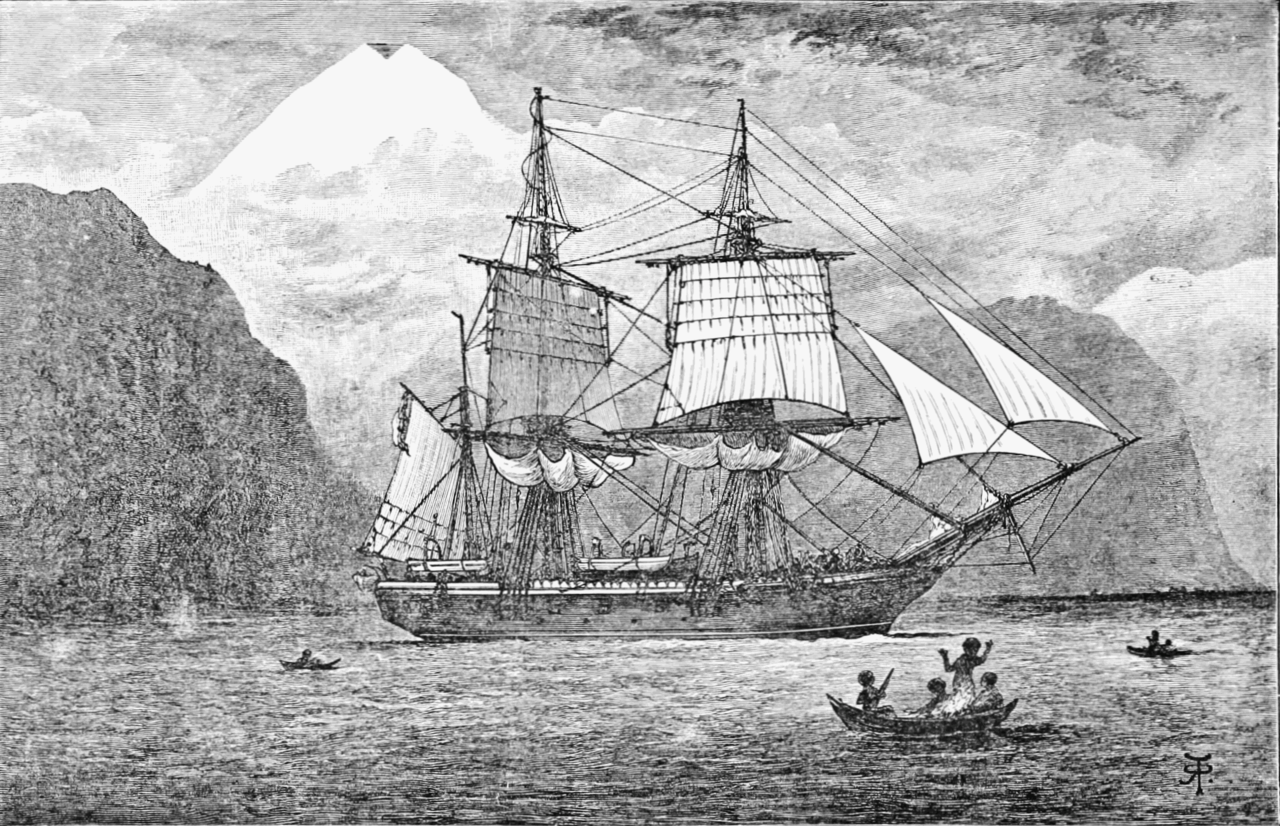
The admiral was Robert FitzRoy, and you probably know him first as the captain of HMS Beagle, the ship that carried a young Charles Darwin around the world. In 1854 FitzRoy took charge of a small new department of the Board of Trade — the Meteorological Department, the body we now call the Met Office. Its original job was unglamorous: collect ships' logs and draw wind charts to help vessels cross oceans faster. But FitzRoy had spent his life at sea, and he knew the price of not knowing what the weather would do. Thousands of ships were being wrecked around the British coast — and the worst was yet to come.
On the night of 25–26 October 1859, the worst storm of the century struck the British Isles. It wrecked 133 ships and killed some 800 people. The most famous victim was the Royal Charter, a steam clipper homeward bound from Melbourne, which was driven onto the rocks off Anglesey with the loss of about 459 lives — every woman and child aboard among them; only 40 people survived. Charles Dickens wrote about the aftermath in The Uncommercial Traveller. FitzRoy, who had been collecting coastal weather observations since 1854, drew up charts of the storm and showed that it could have been tracked across the country as it moved. The disaster, he argued, was not an act of God beyond warning. It was a failure to warn.

The government let him try. From 1 September 1860, weather stations around the coast began telegraphing their readings to London each day, and FitzRoy's clerks collated them into Daily Weather Reports — a series that now forms the longest continuous run of weather data in the National Meteorological Archive. On 5 February 1861 the first storm warning went up: a cone and a drum hoisted on a staff at ports around the coast, telling ships a gale was coming. His storm barometers, printed with instructions for reading the glass, went out to fishing ports around the coast. And he coined a word for the whole enterprise. Before FitzRoy, nobody said “forecast.” He invented the term, and set it out in his 1863 book, The Weather Book.
It was not a smooth triumph. Whenever a forecast was wrong, FitzRoy was mocked in the press, and The Times — which printed his forecasts daily — publicly washed its hands of them, disclaiming “all credit for the occasional success” while demanding “to be held free of any responsibility for the too common failures.” When FitzRoy died on 30 April 1865, the storm-warning service was shut down amid the scientific establishment's doubts about whether the weather could be predicted at all. The losses at sea mounted again, the press and Parliament campaigned, and in 1867 the warnings were restored. The service has run ever since — today as the Shipping Forecast.
So the forecast on your phone is a Victorian invention wearing modern clothes. FitzRoy's clerks with their telegraphed readings and hand-drawn charts have become supercomputers at the Met Office in Exeter, crunching observations from satellites and buoys; the cone and drum on the harbour wall have become a push notification. But the idea is unchanged, and it is his: that the weather is not fate, that it can be measured as it happens, and that telling people what is coming is a public service worth doing — even when you sometimes get it wrong.
More from the story



Keep exploring
The Electric Telegraph
The network that made FitzRoy's forecasts possible — readings telegraphed to London the same day they were taken.
The Victorian Era Invented Your Life
The sewers, the statistics and the public-health machinery the Victorians built — and we still live inside.
The Steamship
The iron ships that carried the Royal Charter's passengers — and the vessels FitzRoy's storm warnings were built to save.