The Houses of Parliament
Barry & Pugin's Gothic palace, 1840–1870

📌 Pin it
On the night of 16 October 1834, workmen burning the Exchequer's old wooden tally sticks in the furnaces under the House of Lords set fire to the medieval Palace of Westminster. Both chambers and most of the royal apartments burned; only Westminster Hall, the Jewel Tower and a few fragments survived, while thousands of Londoners — including the painter J. M. W. Turner — watched the blaze from the river. Parliament decided the replacement must be Gothic or Elizabethan in style, to sit beside Westminster Abbey and the surviving hall, and held a competition that drew 97 entries.
The winner was Charles Barry, a classical architect who had never built in Gothic before, so he brought in the young Augustus Pugin — the century's fiercest Gothic revivalist — to design the interiors, furniture, stained glass and even the inkwells. The first stone was laid in 1840, the Lords Chamber was completed in 1847 and the Commons Chamber in 1852. The clock tower, finished in 1859, and the Victoria Tower, completed in 1860, bookend a riverside front of more than 1,100 rooms, 100 staircases and nearly five kilometres of corridors. Neither man lived to see it finished: Pugin died in 1852, Barry in 1860, and the rebuilding was not complete until about 1870, at a cost of roughly £2.4 million.
The palace has been the working home of Parliament ever since, and in 1987 it was inscribed on UNESCO's World Heritage List. The Commons Chamber was destroyed by German bombing in 1941 and rebuilt by Sir Giles Gilbert Scott, reopening on 26 October 1950. The clock tower was renamed the Elizabeth Tower in 2012 for Queen Elizabeth II's Diamond Jubilee — though the name Big Ben properly belongs to the 13.7-tonne bell inside it, not the tower, and not the clock.
Frequently asked
Is Big Ben the tower or the bell?
The bell. Big Ben is the 13.7-tonne Great Bell inside the tower, first cast in 1856. The tower itself was the Clock Tower until 2012, when it was renamed the Elizabeth Tower for Queen Elizabeth II's Diamond Jubilee.
What survived the fire of 1834?
Westminster Hall, with its great hammerbeam roof of 1399; the Jewel Tower; and the cloisters and chapter house of St Stephen's Chapel. Westminster Hall was built into Barry's new palace and is still used for great state occasions.
Can you visit the Houses of Parliament?
Yes — guided tours run on Saturdays and during parliamentary recesses, and anyone can watch debates from the public galleries of both Houses when Parliament is sitting.
Why it matters today
Westminster made Gothic Revival the language of government — parliament buildings from Ottawa to Budapest borrowed its towers, tracery and riverside silhouette, and its image is now the shorthand for British democracy itself.
More in Architecture & Design
All →
The Crystal Palace
A gardener's glasshouse scaled up to hold the world — 1,848 feet of iron and glass, six million visitors in a single summer, then a single night of fire.

The Albert Memorial
A 176-foot Gothic shrine in Kensington Gardens — Queen Victoria's monument to the husband she lost, crowded with 169 sculpted geniuses and four continents.
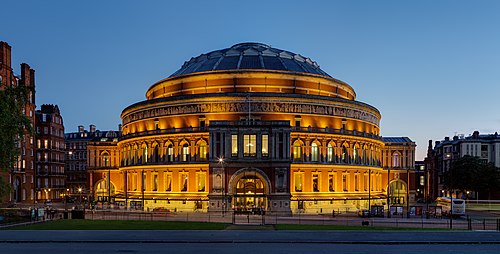
The Royal Albert Hall
An elliptical amphitheatre of red brick and terracotta, opened by a grieving queen in her husband's memory — and home to the Proms every summer since 1941.