The Last of England
Ford Madox Brown

📌 Pin it
A couple huddles under a spray-soaked umbrella at the stern of an emigrant ship, staring stonily ahead as the white cliffs of Dover disappear behind them. Cabbages, strung along the rail as provisions for the voyage, bob in the wind. The painting is a tondo — a roundel — which forces the viewer into the boat with them, spray and all.
Brown began it in 1852, after his friend the sculptor Thomas Woolner emigrated to Australia that July, in a year when more than 350,000 people left England. The models were Brown himself and his wife Emma — who, unlike their painted selves, never emigrated. That is the point: the couple's faces are not sad so much as set, the look of people who have made an irreversible decision.
The Last of England became the definitive image of Victorian emigration — the age when a tenth of Britain's population left, and every port town had a family waving at a ship. It still stops viewers in Birmingham, where the small panel hangs, because it is not about history at all: it is about leaving.
Frequently asked
Who are the couple in The Last of England?
The painter Ford Madox Brown and his wife Emma, modelling as emigrants — though in real life they never emigrated. The painting was prompted by the sculptor Thomas Woolner's emigration to Australia in 1852.
Why are there cabbages on the rail?
They are provisions for the long voyage — fresh vegetables strung up to last the weeks at sea, a touch of observed reality in a deeply symbolic picture.
Where is The Last of England?
Birmingham Museum and Art Gallery.
Why it matters today
The Last of England is still the image Britain reaches for when it talks about emigration — the white cliffs, the set faces, the decision already made.
More in Art & Painters
All →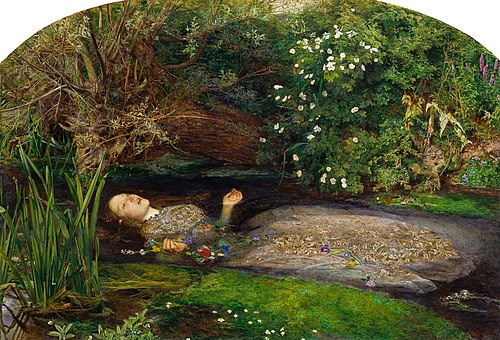
Ophelia
A drowned Shakespearean heroine, painted leaf by leaf on a Surrey riverbank — the image that made the Pre-Raphaelites immortal.

The Lady of Shalott
Tennyson's cursed weaver, caught at the moment she turns to look at Camelot — the most reproduced Victorian painting of them all.

Flaming June
A sleeping woman wrapped in translucent orange silk — the single most famous image of the Aesthetic movement, lost and found again.