The Roses of Heliogabalus
Lawrence Alma-Tadema

📌 Pin it
The scene comes from the Historia Augusta's life of the emperor Elagabalus: at a banquet, the teenage tyrant released such a mass of rose petals from above that several guests were smothered beneath them. Alma-Tadema — Dutch-born, London-based, the most commercially successful classical painter of the age — stages it as pure spectacle: a marble terrace, a bored emperor, and a blizzard of pink.
Alma-Tadema's fame rested on archaeological obsession. He amassed thousands of photographs of Roman artefacts and ruins, and his studio was a museum of antiquity; every vessel, couch and column in the painting is researched. He is said to have had fresh roses shipped from the Riviera for months so he could paint them wilting accurately — Victorian method acting, in oils.
More than two metres wide, the canvas was a sensation of the 1888 season and remains the definitive image of decadent Rome — the one Hollywood's set designers have been quoting, consciously or not, ever since.
Frequently asked
Is the story of Heliogabalus and the roses true?
It comes from the Historia Augusta, a notoriously unreliable Roman source — historians treat the petal-smothering as legend rather than fact, which never stopped painters from loving it.
Where is The Roses of Heliogabalus?
In a private collection.
Who was Alma-Tadema?
Lawrence Alma-Tadema (1836–1912), the Dutch-born British painter who became the great Victorian classicist — famous for archaeologically precise scenes of ancient Rome, and knighted in 1899.
Why it matters today
The painting set the visual template for ancient Rome in popular culture — every cinematic banquet of excess descends from Alma-Tadema's marble terraces.
More in Art & Painters
All →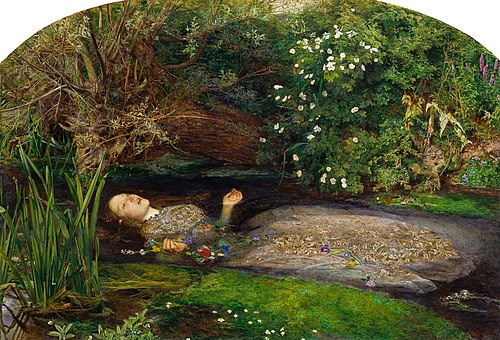
Ophelia
A drowned Shakespearean heroine, painted leaf by leaf on a Surrey riverbank — the image that made the Pre-Raphaelites immortal.

The Lady of Shalott
Tennyson's cursed weaver, caught at the moment she turns to look at Camelot — the most reproduced Victorian painting of them all.

Flaming June
A sleeping woman wrapped in translucent orange silk — the single most famous image of the Aesthetic movement, lost and found again.