The Scapegoat
William Holman Hunt
📌 Pin it
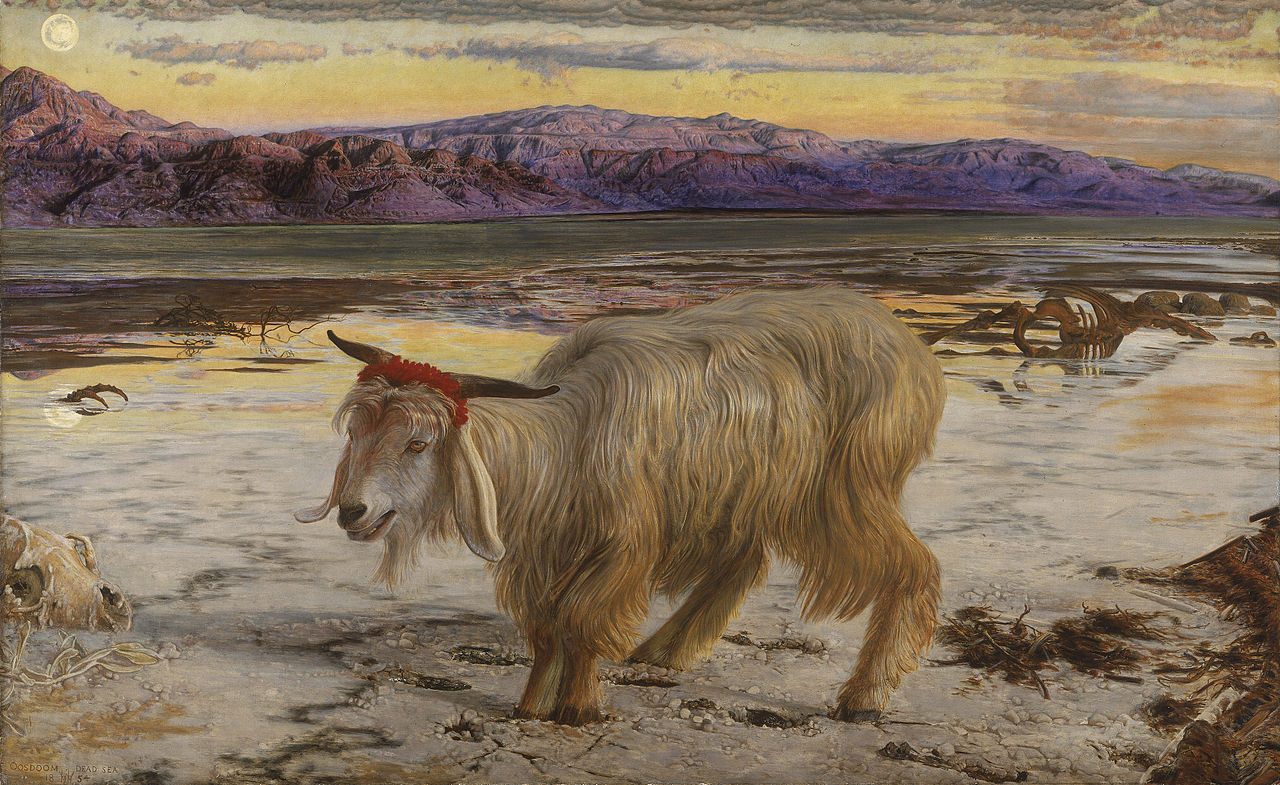
The Book of Leviticus describes the ritual of the scapegoat: on the Day of Atonement, the sins of the people were laid on a goat, which was then driven out into the wilderness to die alone. Holman Hunt, the most devout of the Pre-Raphaelites, decided to paint the scene — and, in the Pre-Raphaelite spirit, to paint it from life. In 1854 he travelled to the Holy Land and set up his easel on the shore of the Dead Sea, in the Judaean desert, to paint the goat, the salt-encrusted ground and the mountains of Edom in the actual light of the place.
The goat in the picture wears a scarlet cloth — the mark of the sin it carries — and stands in a landscape of desolation: cracked earth, a dead tree, the Dead Sea behind it, and on the horizon, a rainbow, the sign of God's covenant. Hunt painted the animal from a real goat tethered in the desert heat, and the landscape from the shore itself. When it was exhibited at the Royal Academy in 1856, the picture was praised for its terrible, literal truth: this was not a symbol painted in a studio, but a scene witnessed.
The Scapegoat is the most extreme example of the Pre-Raphaelite method: truth to nature taken to its limit. Hunt believed that a religious painting should be as factually true as a scientific observation — that the desert, the goat and the light were themselves the theology. The smaller version hangs at Tate Britain; a larger version is at the Lady Lever Art Gallery in Port Sunlight.
Frequently asked
What is a scapegoat in the Bible?
In Leviticus 16, on the Day of Atonement, the high priest laid the sins of the people on a goat and sent it out into the wilderness to die alone. The word 'scapegoat' — someone blamed for others' faults — comes from this ritual.
Did Hunt really paint The Scapegoat in the desert?
Yes. He travelled to the Holy Land in 1854 and painted the goat, the salt-encrusted ground and the Dead Sea landscape on the spot, in the Judaean desert — the most literal application of the Pre-Raphaelite demand for truth to nature.
Where is The Scapegoat?
The smaller version is at Tate Britain, London; a larger version is at the Lady Lever Art Gallery, Port Sunlight.
Why it matters today
The Scapegoat set the standard for religious painting painted from observed nature rather than imagination — Hunt's desert, goat and light made biblical truth a matter of fact, not convention.
More in Art & Painters
All →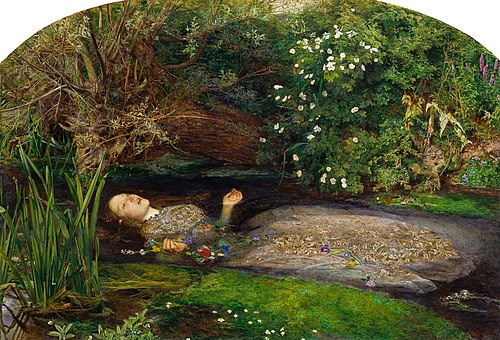
Ophelia
A drowned Shakespearean heroine, painted leaf by leaf on a Surrey riverbank — the image that made the Pre-Raphaelites immortal.

The Lady of Shalott
Tennyson's cursed weaver, caught at the moment she turns to look at Camelot — the most reproduced Victorian painting of them all.

Flaming June
A sleeping woman wrapped in translucent orange silk — the single most famous image of the Aesthetic movement, lost and found again.