Hylas and the Nymphs
John William Waterhouse

📌 Pin it
Hylas was the beautiful young companion of Hercules on the voyage of the Argo. Sent ashore to fetch water, he knelt at a pool — and the nymphs who lived in it, seven of them, reached up out of the water and pulled him down. He was never seen again. Waterhouse painted the moment of the lure: Hylas, naked, leaning over the dark water with his pitcher, while the nymphs rise around him, their pale arms outstretched, their faces half-hidden by water lilies. It is the most famous of Waterhouse's many paintings of doomed young men and dangerous women.
Manchester Art Gallery bought the painting from the artist in 1896, the year it was painted, and it has been one of the gallery's most popular pictures ever since. Waterhouse was the last of the Pre-Raphaelite line — he never joined the Brotherhood, but he inherited their subjects, their models and their method, and he carried the tradition into the 20th century. Hylas and the Nymphs is his masterpiece: a pool of still water, a moment of suspended desire, and a boy about to vanish.
In January 2018 the painting made headlines again. The gallery's curator of contemporary art, Clare Gannaway, temporarily removed it from display as part of a project with the artist Sonia Boyce, to prompt debate about how museums present the female body — a decision influenced by the MeToo movement. The backlash was immediate and international: visitors filled the empty wall with Post-it notes, the press called it censorship, and after one week the Manchester City Council returned the painting to the wall. A Victorian painting, 122 years old, had started a national argument about art, gender and the gaze.
Frequently asked
What is the story of Hylas and the Nymphs?
Hylas, the young companion of Hercules on the voyage of the Argo, was sent ashore for water. The nymphs of the pool were enchanted by his beauty and pulled him under — he vanished, and the Argonauts sailed on without him.
Why was Hylas and the Nymphs removed in 2018?
Manchester Art Gallery's curator removed it for a week as part of a project with artist Sonia Boyce, to prompt debate about how museums display the female body, influenced by the MeToo movement. The public backlash was so strong the council returned it to the wall within a week.
Where is Hylas and the Nymphs?
Manchester Art Gallery, where it has hung since the gallery bought it from Waterhouse in 1896.
Why it matters today
Hylas and the Nymphs made Waterhouse the last Pre-Raphaelite — and in 2018 it proved that a Victorian painting could still start a national argument about the male gaze, 122 years after it was painted.
More in Art & Painters
All →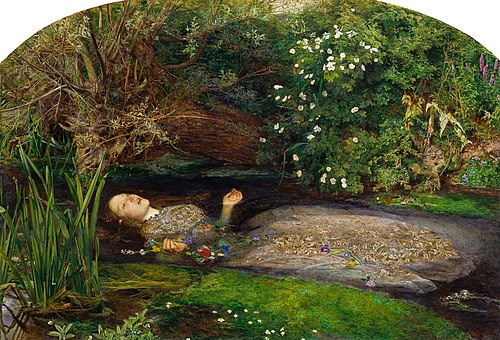
Ophelia
A drowned Shakespearean heroine, painted leaf by leaf on a Surrey riverbank — the image that made the Pre-Raphaelites immortal.

The Lady of Shalott
Tennyson's cursed weaver, caught at the moment she turns to look at Camelot — the most reproduced Victorian painting of them all.

Flaming June
A sleeping woman wrapped in translucent orange silk — the single most famous image of the Aesthetic movement, lost and found again.