Crossness Pumping Station
Bazalgette's cathedral of ironwork, 1865

📌 Pin it
In the summer of 1858 the Thames stank so badly that Parliament could barely sit — the Great Stink. London's sewage flowed straight into the river, cholera had already killed tens of thousands, and the city needed a sewer system. The engineer Joseph Bazalgette was given the job: a network of intercepting sewers carrying the waste east, out of the city, to be discharged into the Thames at high tide. At the far end of the southern system, on the Erith Marshes, stood the pumping station that would lift the sewage the final 21 feet — Crossness.
Built between 1859 and 1865 by the contractor William Webster, Crossness was designed by Bazalgette with the architect Charles Henry Driver, and it is the most unlikely cathedral in London. Outside it is yellow-brick Romanesque; inside, the beam engine house is a riot of ornamental cast iron — columns, arches and balustrades picked out in red, green, blue and gold, with motifs said to be inspired by laxative fruits. The power came from four colossal beam engines built by James Watt & Co., named Victoria, Prince Consort, Albert Edward and Alexandra. The Prince of Wales himself opened the works on 4 April 1865, turning the wheel that started the engines before an audience of princes, dukes and two archbishops.
The architectural historian Nikolaus Pevsner called it "a masterpiece of engineering — a Victorian cathedral of ironwork". The station pumped until 1956, then rotted for decades until volunteers formed the Crossness Engines Trust and restored it. It was Grade I listed in 1970 and opened to the public as a museum in 2016, where on open days the Prince Consort engine still steams.
Frequently asked
Why was a sewage pumping station built at all?
The Great Stink of 1858, when the Thames became so foul that Parliament nearly stopped sitting, and repeated cholera epidemics. Bazalgette's sewers carried London's waste east to Crossness, where the engines lifted it so it could be discharged into the river at high tide, away from the city.
Why is a sewage works so ornate?
Because the Victorians believed even infrastructure deserved beauty — and because the opening ceremony would be attended by royalty. Driver's cast-iron decoration, painted in bright colours with plant and fruit motifs, turned an engine house into a showpiece. Pevsner thought it a masterpiece.
Can you visit Crossness?
Yes — it is now a museum, open on regular open days, when the restored Prince Consort beam engine is steamed and visitors can walk through the ironwork engine house.
Why it matters today
Crossness was the beating heart of the first modern metropolitan sewer system — the model every great city copied — and it helped end cholera in London, turning sanitation from a filthy necessity into a public work worth celebrating.
More in Architecture & Design
All →
The Crystal Palace
A gardener's glasshouse scaled up to hold the world — 1,848 feet of iron and glass, six million visitors in a single summer, then a single night of fire.
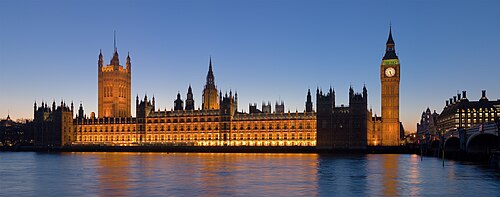
The Houses of Parliament
Rebuilt from the ashes of the 1834 fire, the Palace of Westminster made Gothic Revival the face of British democracy — and gave London its most famous silhouette.

The Albert Memorial
A 176-foot Gothic shrine in Kensington Gardens — Queen Victoria's monument to the husband she lost, crowded with 169 sculpted geniuses and four continents.