The Natural History Museum
Waterhouse's terracotta cathedral of nature, 1881

📌 Pin it
The museum grew out of the natural history collections of the British Museum, founded on the physician Sir Hans Sloane's collection, bought by Parliament in 1753. By the 1860s the specimens had outgrown Bloomsbury, and the naturalist Richard Owen campaigned for a museum of their own. Captain Francis Fowke — the Royal Albert Hall's designer — won the competition to build it in 1864, but died a year later, and the relatively unknown Alfred Waterhouse took over in February 1866, redrawing the plans in his own idiosyncratic Romanesque style.
Waterhouse clad the entire building in terracotta, made by Gibbs and Canning of Tamworth, because the material resisted the soot of Victorian London — and he turned the cladding into a lesson: hundreds of plants and animals are moulded into the tiles, living species on the west wing and extinct ones on the east, with the great hall's ceiling covered in 162 panels of the world's flora. The museum opened its doors on 18 April 1881, though the move from Bloomsbury was not finished until 1883. It remained legally part of the British Museum until 1963, and was not formally renamed the Natural History Museum until 1992.
Today the museum holds some 80 million specimens across five collections — botany, entomology, mineralogy, palaeontology and zoology — including specimens collected by Charles Darwin, and hundreds of its scientists work on taxonomy and conservation. Its central hall, Hintze Hall, was dominated for over a century by Dippy, the Diplodocus cast; since a 2017 redevelopment, a 25.2-metre blue whale skeleton named Hope hangs in its place, diving from the ceiling. Like other national museums, admission to the permanent galleries is free.
Frequently asked
Why is the building covered in animals?
Waterhouse moulded hundreds of plants and animals into the terracotta tiles as a taxonomic statement: living species decorate the west wing and extinct species the east, so the building itself teaches natural history before you reach a gallery.
Was it always called the Natural History Museum?
No — it was officially the British Museum (Natural History) until 1992, even though it became legally separate from the British Museum in 1963. The building opened in 1881 as the natural history department's new home.
Is the Natural History Museum free?
Yes — like other publicly funded national museums in Britain, admission to the permanent galleries is free, though special exhibitions are ticketed.
Why it matters today
Waterhouse's terracotta cathedral made the museum building part of the exhibit — the idea that a museum's architecture should teach, not merely house, runs through every natural history museum built since.
More in Architecture & Design
All →
The Crystal Palace
A gardener's glasshouse scaled up to hold the world — 1,848 feet of iron and glass, six million visitors in a single summer, then a single night of fire.
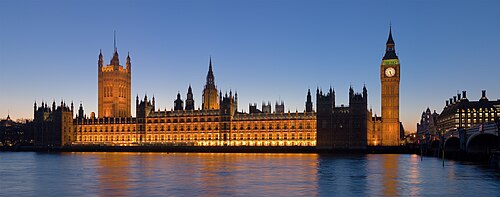
The Houses of Parliament
Rebuilt from the ashes of the 1834 fire, the Palace of Westminster made Gothic Revival the face of British democracy — and gave London its most famous silhouette.

The Albert Memorial
A 176-foot Gothic shrine in Kensington Gardens — Queen Victoria's monument to the husband she lost, crowded with 169 sculpted geniuses and four continents.