The Royal Albert Dock
Hartley's fireproof dock, 1846

📌 Pin it
By the 1830s Liverpool was one of the busiest ports on earth, and its docks had a fatal flaw: warehouses built of timber burned. The dock engineer Jesse Hartley proposed something radical — an enclosed dock whose warehouses would contain no structural wood at all. Designed with Philip Hardwick and opened by Prince Albert on 30 July 1846, the Albert Dock was built entirely of cast iron, brick and stone, with hydraulic cranes and five-storey warehouses ringing a rectangular basin. It was the world's first non-combustible warehouse system.
For a century the dock did exactly what it was built for. Its fireproof vaults held the cargoes that made Liverpool rich — cotton, tea, silk, tobacco and brandy — safe from the flames that had haunted every timber dock before it. In 1952 the complex was given Grade I listed status, the largest collection of Grade I listed buildings in Britain. But containerisation passed it by: the dock closed in 1972, and for a decade its colonnades stood empty and derelict on the Mersey.
The rescue came in the 1980s, when the dock was restored and reopened in 1988 as a cultural and commercial quarter — home to Tate Liverpool and the Merseyside Maritime Museum. In 2004 it became the centrepiece of Liverpool's UNESCO World Heritage listing, and in 2018 it was granted a Royal Charter and renamed the Royal Albert Dock. The UNESCO status was lost in 2021 — only the third site ever delisted — over new waterfront development, a decision still argued about in the city. The dock itself, though, stands unchanged: Hartley's iron colonnades reflected in the basin, exactly as they were in 1846.
Frequently asked
Why is it called the Royal Albert Dock?
It was the Albert Dock for 172 years, named for Prince Albert, who opened it in 1846. In 2018 it was granted a Royal Charter and renamed the Royal Albert Dock — the 'Royal' is new, the building is not.
What made the dock fireproof?
Its warehouses were built entirely of cast iron, brick and stone, with no structural timber anywhere — the first warehouse system in the world built that way, so a fire in one store could not spread through wooden floors and roofs.
Why did Liverpool lose its UNESCO World Heritage status?
Liverpool's waterfront was inscribed in 2004 and delisted in July 2021 — only the third site ever removed from the list — after UNESCO judged that approved development, including the Liverpool Waters scheme and the new Everton stadium, had damaged the site's heritage value. The decision remains controversial in the city.
Why it matters today
The Albert Dock invented the fireproof warehouse — cast-iron frame construction that every industrial building after it borrowed — and its 1980s rescue invented the modern waterfront regeneration, proving a derelict working dock could become a city's cultural quarter.
More in Architecture & Design
All →
The Crystal Palace
A gardener's glasshouse scaled up to hold the world — 1,848 feet of iron and glass, six million visitors in a single summer, then a single night of fire.
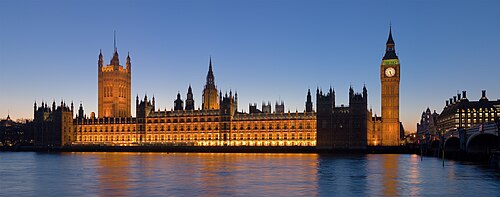
The Houses of Parliament
Rebuilt from the ashes of the 1834 fire, the Palace of Westminster made Gothic Revival the face of British democracy — and gave London its most famous silhouette.

The Albert Memorial
A 176-foot Gothic shrine in Kensington Gardens — Queen Victoria's monument to the husband she lost, crowded with 169 sculpted geniuses and four continents.