The Victoria and Albert Museum
The world's museum of design, 1852

📌 Pin it
The V&A began as a school. The Government School of Design was founded at Somerset House in 1837 — the V&A's own history gives that year, though some sources say 1832 — because the government feared poor design was holding back British industry. In January 1852 Henry Cole was put in charge, and with a parliamentary grant of £5,000 he bought exhibits from the Great Exhibition of 1851 to form the nucleus of a new museum. The Museum of Manufactures opened that May at Marlborough House, moved to Somerset House in September, and was renamed the Museum of Ornamental Art the following year.
In 1857 the museum moved with the Department of Science and Art to South Kensington, becoming the South Kensington Museum, and Queen Victoria officially opened it on 20 June 1857. It was a museum with a mission: to improve the taste of manufacturers and the public alike. It was also a pioneer of the visitor experience — in 1857 it opened the world's first museum refreshment room, and the following year it introduced late-night openings lit by gas, so working people could visit after work.
On 17 May 1899 Queen Victoria laid the foundation stone of a grand new building by Aston Webb and announced that the museum would henceforth be called the Victoria and Albert Museum. The Webb building opened in 1909, and the museum has grown ever since: today it holds more than 2.8 million objects spanning 5,000 years, across 145 galleries on 12.5 acres — the world's largest museum of applied and decorative arts and design, with offshoots from the Young V&A in Bethnal Green to V&A Dundee, opened in 2018. Admission, like the other national museums, is free.
Frequently asked
Why has the V&A had so many names?
Because it kept outgrowing its identity: Museum of Manufactures in 1852, Museum of Ornamental Art in 1853, South Kensington Museum from 1857 — until Queen Victoria renamed it for herself and Albert in 1899, and the name finally stuck.
What makes the V&A different from other museums?
It collects applied art and design — furniture, fashion, ceramics, jewellery, photographs — the everyday made beautiful, rather than fine art alone. Its founding purpose was to teach manufacturers and the public what good design looks like.
Is the V&A really the world's largest design museum?
It is the world's largest museum of applied arts, decorative arts and design, with more than 2.8 million objects in its permanent collection, spanning 5,000 years of human creativity.
Why it matters today
The V&A invented the design museum — the idea that everyday objects deserve a museum, and that good design can be taught — a model copied by design museums from New York's Cooper Hewitt to V&A Dundee.
More in Architecture & Design
All →
The Crystal Palace
A gardener's glasshouse scaled up to hold the world — 1,848 feet of iron and glass, six million visitors in a single summer, then a single night of fire.
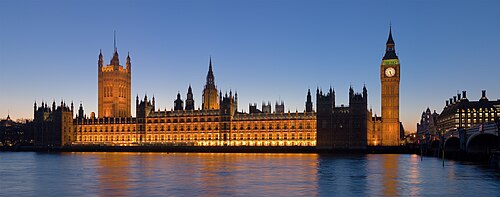
The Houses of Parliament
Rebuilt from the ashes of the 1834 fire, the Palace of Westminster made Gothic Revival the face of British democracy — and gave London its most famous silhouette.

The Albert Memorial
A 176-foot Gothic shrine in Kensington Gardens — Queen Victoria's monument to the husband she lost, crowded with 169 sculpted geniuses and four continents.