The Savoy Theatre
The world's first electrically lit public building, 1881

📌 Pin it
The impresario Richard D'Oyly Carte had a problem: the comic operas of W. S. Gilbert and Arthur Sullivan were making him rich, but he had no theatre of his own to put them in. So he bought a plot on the Strand, on the site of the old Savoy Palace, and commissioned the theatre architect C. J. Phipps to build him a permanent home for light opera. The Savoy opened on 10 October 1881 with Patience, transferred from the Opera Comique, and it seated 1,292 people in an auditorium designed for comfort — no pillars blocking the view, and a newfangled system of queuing at the box office instead of a crush.
The theatre's real fame was its lighting. The Savoy was the first public building in the world to be lit entirely by electricity: about 1,200 Swan incandescent lamps, installed by Siemens Brothers and powered by a 120-horsepower steam generator on waste land beside the theatre. The Times reported that the colours of the costumes appeared "as true and distinct by daylight" under the new light, without gaslight's heat and stale air. The first generator proved too small for the stage, which stayed gas-lit until 28 December 1881, when Carte stepped on stage and smashed a glowing bulb before the audience to prove the new technology safe.
For over a century the Savoy was the home of the D'Oyly Carte Opera Company, which staged the Gilbert and Sullivan operas there until the copyrights expired in 1962. Carte's son Rupert rebuilt and modernised the theatre in 1929; it was gutted by fire in 1990 and rebuilt again, reopening in 1993. The profits of the operas also built the Savoy Hotel next door in 1889, and the theatre still plays on the Strand today — the house that electricity built.
Frequently asked
Why is it called the Savoy?
After the Savoy Palace, the medieval palace of the Dukes of Lancaster that stood on the site until it was destroyed in the Peasants' Revolt of 1381. Only the Savoy Chapel survived, and it still stands beside the theatre.
What was so special about the Savoy's lighting?
Because no public building had ever been lit by electricity before — gas was the only option, and it was hot, smelly and used up the air. The Savoy's 1,200 Swan incandescent lamps were cooler, cleaner and showed costume colours as they looked in daylight, which is why The Times praised the effect.
Can you still see a show at the Savoy?
Yes — it is still a working West End theatre on the Strand in London, staging musicals and plays.
Why it matters today
The Savoy proved electric light could work at public scale — theatres, hotels and then whole cities followed its lead, and the queue Carte introduced at its box office became a British institution.
More in Architecture & Design
All →
The Crystal Palace
A gardener's glasshouse scaled up to hold the world — 1,848 feet of iron and glass, six million visitors in a single summer, then a single night of fire.
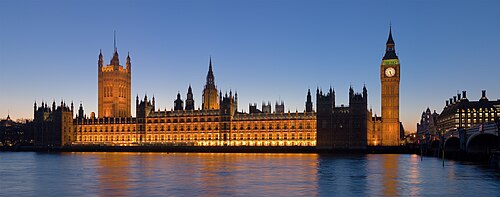
The Houses of Parliament
Rebuilt from the ashes of the 1834 fire, the Palace of Westminster made Gothic Revival the face of British democracy — and gave London its most famous silhouette.

The Albert Memorial
A 176-foot Gothic shrine in Kensington Gardens — Queen Victoria's monument to the husband she lost, crowded with 169 sculpted geniuses and four continents.